
Slow Living at Home: Designing for Peace, Not Perfection
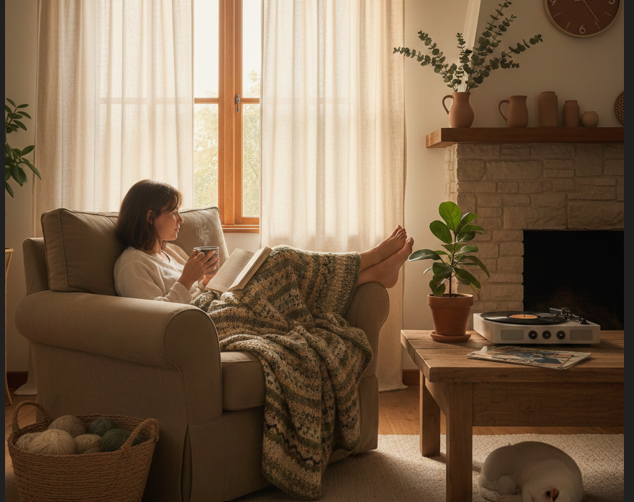
A drama free life, a life of slow living adn no stress is about choosing intention over speed, peace over conflict, and presence over pressure. At home, slow living helps us move away from the concept of perfection and towards a space that feels calm, comfortable, and good for our emotional well-being. A slow living home is not perfect and is certainly not designed to impress. It is lived in, flexible, and personal.
The first step in designing a peaceful space is to release the concept of perfection. Many of the beautiful spaces we see online today are not real. They’re staged, edited, and often temporary. A slow living home knows that cushions move, books accumulate, and surfaces get used. Rather than fighting this, the focus is on creating a space that feels peaceful and comfortable despite the imperfections.
One of the core concepts of slow living at home is the concept of simplicity. This is not about minimalism; it’s about thinking carefully about the things we bring into our home. This helps us create a space that feels peaceful and easy to live in. It also helps us minimize visual clutter, which reduces our mental clutter.
Using natural materials helps us create a peaceful space. Wood, linen, wool, clay, and stone are all materials that bring a sense of calm and serenity into our home without screaming for attention. These materials also change over time and develop a beautiful character that fits perfectly with the concept of slow living. Scratches, creases, and differences all become a part of our home’s story.
Color also plays an important role in defining the mood of a space. For slow living interiors, muted colors are used. Muted colors such as warm neutrals, greens, blues, and earth tones create balance. These colors are easy on the eyes and create a sense of balance and harmony. Rather than choosing colors that may go out of fashion in a season or two, slow living interiors feature colors that create harmony in the space.
Slow living also means designing spaces that invite you to slow down. This may include designing spaces for reading, having tea in the morning, or having dinner with family and friends. The furniture is placed in such a manner that it encourages interaction. The home becomes a space that encourages slowing down rather than rushing through.
Slow living homes also celebrate imperfection. For slow living interiors, handmade items, vintage furniture, and antiques are used. These items add character and emotion to the space. The home feels more personal when it has such items. When designing for peace, it is important that these items coexist with each other without looking too uniform.
Slow living also means slowing down in our approach to our homes. Cleaning, decorating, and organizing our homes are activities that slow living encourages. The home evolves with time, and it is designed in such a manner that it is easy to maintain.
At the end of the day, slow living at home is about building a space that supports who you are, not who you think you should be. Creating a space for peace, not perfection, allows the home to be a steady presence, not an added pressure. By choosing softness over sharpness, and meaning over appearance, you create a home where you can truly rest.
