
Why Botanical Art Is the Ultimate Luxury for Calm, Elevated Living SArpaces
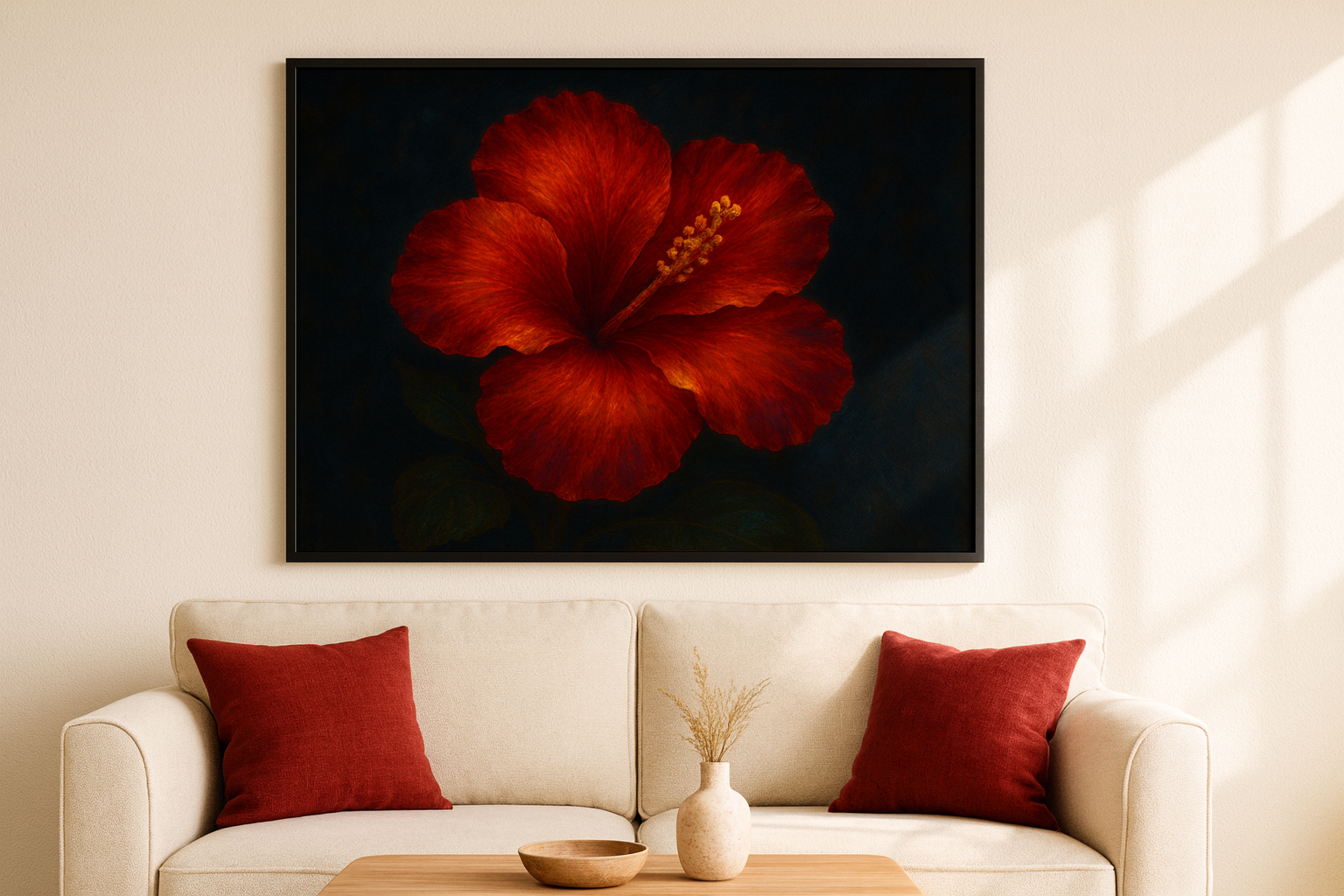
Art print: Fire Hibiscus by Botanique-Prints.com
True luxury is no longer defined by excess or opulence. In today’s homes, luxury is increasingly associated with calm, intention and quality. Botanical art embodies this shift perfectly. Rooted in nature and crafted with care, it offers a refined way to create living spaces that feel elevated yet deeply restful.
Botanical art brings a sense of stillness that few other art forms can achieve. The natural forms of leaves, flowers and stems have an inherently soothing quality. When rendered with precision and sensitivity, they invite the viewer to slow down and observe. This quiet presence makes botanical art especially powerful in living spaces designed for relaxation, reflection and balance.
One of the defining qualities of botanical art is its timelessness. Unlike trend-led artwork that can feel dated within a few years, botanical subjects remain eternally relevant. Nature does not go out of style. A carefully chosen botanical piece can live in a home for decades, adapting effortlessly as interiors evolve. This longevity is a hallmark of true luxury.
Calm living spaces rely heavily on visual harmony. Botanical art works in sympathy with neutral palettes and natural materials, which are often central to serene interiors. Soft greens, gentle florals and organic lines complement stone, wood, linen and plaster finishes. Rather than interrupting the space, botanical art completes it, reinforcing a sense of cohesion and ease.
There is also a deep emotional resonance to botanical art. Flowers and plants are often connected to memory, ritual and meaning. They can evoke personal experiences such as gardens from childhood, moments of healing or a connection to place. This emotional layer elevates botanical art beyond decoration, turning it into something intimate and enduring.
In luxury interiors, quality matters more than quantity. A single botanical artwork, thoughtfully placed, can have greater impact than multiple decorative pieces. The detail, texture and craftsmanship invite closer inspection, rewarding the viewer over time. This slow appreciation aligns with the growing desire for mindful living and intentional design.
Botanical art also supports wellbeing in subtle but meaningful ways. Studies have long shown that exposure to natural imagery can reduce stress and improve mood. In homes where access to outdoor space may be limited, botanical artwork acts as a visual anchor to the natural world. It brings the restorative qualities of nature indoors without overwhelming the senses.
The versatility of botanical art further contributes to its luxury status. It works seamlessly across different rooms, from living areas and bedrooms to hallways and studies. Whether displayed as a statement piece or part of a carefully curated collection, botanical art adapts to its surroundings while maintaining its quiet authority.
Another reason botanical art feels luxurious is its association with patience and skill. Creating detailed botanical work requires time, discipline and a deep understanding of form. In an age of fast production and instant consumption, this dedication to craft stands out. Owning botanical art is a way of honouring that process and choosing depth over speed.
Ultimately, botanical art represents a return to what matters. It celebrates beauty without excess indicating luxury through calm rather than display. In elevated living spaces designed to nurture rather than impress, botanical art feels not only appropriate but essential.
For those seeking homes that offer refuge, clarity and understated elegance, botanical art remains the ultimate expression of luxury.
